Skip to content
TRP

Podcast season

Season 1 — Redemption Stories

Short-form redemption stories from The Redemption Project Podcast. This permanent season archive preserves the season's relationship to Redemption Stories and the umbrella The Redemption Project Podcast.

15 episodes

July 2026

Breaking Destructive Cycles: How Blue Monarch Rebuilds Mothers, Children and Families

Stories of Good Work

Breaking Destructive Cycles: How Blue Monarch Rebuilds Mothers, Children and Families

When a mother enters recovery, her children do not simply wait outside the process. They may have witnessed addiction, instability, incarceration, violence or the removal of a parent from the home. They may also be carrying trauma of their own—sometimes without the words to explain what happened. Blue Monarch was created around the belief that lasting recovery requires helping the entire family heal. In the Season 5 premiere of The Redemption Project , Brandon Burley speaks with Shakia, Blue Monarch’s officer of development and community relations—and a graduate of the program herself. After struggling with opioid addiction for 14 years and cycling through programs that did not provide enough time or support, Shakia reached a breaking point following a near-fatal automobile crash. Her arrival at Blue Monarch began a long recovery process that she says changed not only her life, but the lives of her children. Blue Monarch is a long-term, faith-based residential program serving mothers and children affected by addiction, abuse and economic hardship. Women may enter with their children or begin the program while working toward restoring custody. The organization places equal emphasis on the mother’s recovery and the child’s healing. The residential phase lasts approximately 18 to 24 months. During that time, women participate in individualized counseling, group therapy, parenting education, cognitive-behavioral programming, spiritual development and intensive life-skills work. Recovery is treated as their full-time job. Graduates may then enter WINGS—Women in Newly Grounded Success—a transitional community where families can live in onsite cottages while the mother begins working, pursuing education and building greater independence. A family completing the full continuum may receive nearly three years of structured support. Brandon and Shakia also discuss Blue Monarch’s relationships with courts, probation officers, the Tennessee Department of Correction and the Department of Children’s Services. Some women arrive after incarceration, while others are referred by judges, caseworkers or community partners. The organization is now expanding its campus, constructing a multipurpose building and planning additional housing and childcare resources so it can serve more families. This is not a story about temporarily removing a woman from addiction. It is about rebuilding the life beneath it—and giving her children the opportunity to grow up without repeating the same cycle. I am a retired detective and criminal justice / government educator based in Tennessee. I am a commentary write for Tennessee Lookout and a weekly columnist with Knox TN Today . My work examines public policy, public safety systems and civic responsibility. My reporting and commentary have also appeared in Governing , The Arizona Capitol Times , South Florida Sun Sentinel , Police1 , among other state and regional outlets. Get full access to The Redemption Project Newsroom at newsroom.theredemptionproject.news/subscribe

S1 E5
1700
Open episodeWatch
Also available on
Redemption Isn’t Always Rescue—Sometimes It’s Faithfulness

Redemption Stories

Redemption Isn’t Always Rescue—Sometimes It’s Faithfulness

If you’re wondering, why are these stories being re-uploaded this week . . . well, I was integrating my server from an old one to a new one when POOF, several redemption stories vanished. That said, these stories DESERVE to be told. So I am sharing them again! Most redemption stories begin with collapse. This one begins with calling. When I sat down with Matt Mihelic , there was no dramatic confession. No public fall from grace. No moment that required headlines. And yet—his story is a reminder of something we don’t talk about enough: Redemption isn’t only about being saved from destruction.Sometimes it’s about being redirected from comfort . Matt grew up in the church. Faith wasn’t foreign to him. He knew Scripture. He knew structure. He knew what a “successful” path looked like. Law school made sense . A JD made sense. Stability made sense. But over time, something else grew louder. A desire to preach.A burden for the local church.A restlessness that credentials couldn’t quiet. Instead of silencing that call, Matt listened. After law school, he did what almost no one expects—he became a missionary. Uganda. Church planting. Long stretches away from home. Physical illness. Recovery. Prayer. And then, unexpectedly, Knoxville re-entered the picture. The city he once assumed he’d leave behind became a burden he couldn’t shake. What followed wasn’t a grand launch—it was obedience. When Matt arrived at Island Home Baptist Church , it was hurting. No pastor for over two years. Key leaders lost during the search process. Attendance dwindled. Records incomplete. Hope thin. Fourteen people showed up that first Sunday. Not fourteen staff members. Fourteen people. Redemption doesn’t rush moments like that. It sits in them. Matt didn’t come in with a rebrand. He didn’t chase trends. He made a simple commitment: preach the Word, care for people, and trust God to do the work. And slowly—He did. Healing came before growth. Trust before momentum. Structure before scale. The church rebuilt membership intentionally. Leadership was clarified. Teaching deepened. Unity strengthened. Today, Island Home looks nothing like it did in those early days—but the credit doesn’t belong to strategy. It belongs to God. That same posture now defines Matt’s broader role in the city. As Chair of the Knox County Church Network , he works alongside pastors from different denominations—churches that don’t agree on everything, but agree on the Gospel. The network doesn’t exist to manufacture unity, Matt says—it exists to express the unity that already exists in Christ. Together, they pray.They share burdens.They respond to real needs—like addiction, recovery, and community care—through partnerships like the Renew Clinic. It’s not flashy work. It’s faithful work. And that’s what makes this a redemption story. Because redemption isn’t always dramatic.It isn’t always public.And it isn’t always fast. Sometimes it’s a man choosing obedience over prestige.A pastor choosing patience over numbers.A network choosing prayer over control. Sometimes redemption looks like this: Staying.Serving.Trusting that the Word will do the work. That kind of story won’t always trend. But it lasts. I am a retired detective and criminal justice / government educator based in Tennessee. I am a commentary write for Tennessee Lookout and a weekly columnist with Knox TN Today . My work examines public policy, public safety systems and civic responsibility. My reporting and commentary have also appeared in Governing , The Arizona Capitol Times , South Florida Sun Sentinel , Police1 , among other state and regional outlets. Get full access to The Redemption Project Newsroom at newsroom.theredemptionproject.news/subscribe

S1 E17
1306
Open episodeWatch
Also available on
From Abortion Pain to Healing, Hope and Purpose: The Redemption Story of Breanna Houston

Redemption Stories

From Abortion Pain to Healing, Hope and Purpose: The Redemption Story of Breanna Houston

Breanna Houston remembers being 18 years old, living in a college dorm and realizing she was pregnant. She was scared. She was the first in her family to attend college. She had plans. She wanted a future in television. She wanted to be a producer. And in that moment, the story she had absorbed from the world around her seemed simple: A pregnancy would ruin everything. So she did what many young women do when fear becomes louder than everything else. She kept it quiet. She did not tell her parents. She went to Planned Parenthood. Her story is Season 1, Episode 16 of The Redemption Project . It is a story about abortion, grief, faith, forgiveness and what happens when the part of your life you most want to hide becomes the place where God begins His deepest work. Breanna did not grow up in a deeply discipled Christian home. She was introduced to faith as a child, but by the time she reached college, God was not the center of her life. She was focused on friends, boys and the future she wanted to build. Then she got pregnant. At 18, away from home and with her future seemingly on the line, she panicked. She knew her parents loved her. She believed they would have helped her. But fear has a way of narrowing a person’s vision. She carried the weight of being the first in her family to attend college and did not want to disappoint anyone. So she looked for what the culture had told her was the solution. “I have this problem,” she remembered thinking. “This is what you do.” Before the abortion, Breanna believes God tried to reach her. She describes preparing for the appointment and suddenly having what she now sees as a spiritual encounter. At the time, she thought it might have been a panic attack. Looking back, she believes the Lord was showing her the truth. But fear kept moving her forward. At the clinic, she remembers the ultrasound. She was told she was around eight weeks pregnant. She looked at the screen and saw what appeared to be a small dot. Her reaction was relief. She thought they had caught it in time. One of the painful realities of Breanna’s story is that she did not fully understand what was happening. Not because she lacked intelligence or compassion, but because she was young, frightened and processing everything through the lens she had been given. When she returned for the abortion, the atmosphere felt different. She remembers the pace, the sounds, the pain and eventually being sent home. Then she slept. But something had changed. She could not yet put words to it, but she felt loss. And that loss followed her for year s. Later, Breanna heard the Gospel in a small church and broke down. She remembers retreating to a bathroom and crying uncontrollably as the truth of God’s grace finally reached places she had spent years trying to hide. She accepted Christ’s forgiveness. But accepting forgiveness from God and receiving it fully in your own heart are not always the same thing. For years, Breanna carried unforgiveness toward herself. It was a quiet prison. No bars. No public sentence. Just the same private accusation repeated again and again. Life moved forward. She married. She had children. The abortion became part of her past. Or so she thought. Then one day, after the birth of her son Oliver, she was sitting in her kitchen. An ultrasound picture from early in her pregnancy was attached to the refrigerator. She looked at the image. Then she looked at her six-month-old son. Then she looked back at the ultrasound. In that moment, years of buried grief surfaced all at once. The pain finally had a name. The loss became real in a way it never had before. Grief does not always wait for understanding before it arrives. For a season, the weight of that realization pulled her into a darker place. But God was not finished with her story. Not long afterward, her church offered a Bible study for women who had experienced abortion called Forgiven and Set Free. Breanna attended. The study did not erase the past. It did not make the abortion disappear. What it did was force her to confront a truth she had spent years resisting. If Christ had forgiven her, who was she to continue condemning herself? She came to understand that holding on to unforgiveness was not humility. It was refusing to receive a gift Christ had already given. That realization changed everything. Not overnight. But steadily. The grief remained real. The forgiveness became real, too. For the first time, Breanna began to understand that redemption is not pretending sin never happened. Redemption is what happens when God’s grace reaches the very place where shame once lived. Over time, God began transforming the most painful chapter of her story into a ministry for others. Today, Breanna works with Alliance Family Services and is helping develop a pregnancy-resource clinic effort in Lenoir City. Her desire is simple: to meet women in moments of fear and help them understand they are not alone. To provide support before panic makes the decision. To offer hope before someone believes there are no options. To share truth, compassion, practical help and the Gospel with women facing some of the hardest moments of their lives. Before the ministry, there was mercy. Before the mission, there was grace. Before she could help others, God had to heal her. That is what makes this a redemption story. Not that the past disappeared. Not that the wound was erased. But that the wound did not get the final word. Today, Breanna wants women facing unexpected pregnancies to know they are not alone. She wants women carrying abortion grief to know they are not beyond forgiveness. And she wants people who believe their worst decision defines them to know something she learned the hard way: God’s grace reaches farther than our shame. The chapter Breanna most wanted hidden became the chapter God used most. That is redemption. And that is why her story matters. I am a retired detective and criminal justice / government educator based in Tennessee. I am a commentary write for Tennessee Lookout and a weekly columnist with Knox TN Today . My work examines public policy, public safety systems and civic responsibility. My reporting and commentary have also appeared in Governing , The Arizona Capitol Times , South Florida Sun Sentinel , Police1 , among other state and regional outlets. Get full access to The Redemption Project Newsroom at newsroom.theredemptionproject.news/subscribe

S1 E16
1848
Open episodeWatch
Also available on

April 2026

Redemption Story of the Week: Steve Smith

Redemption Stories

Redemption Story of the Week: Steve Smith

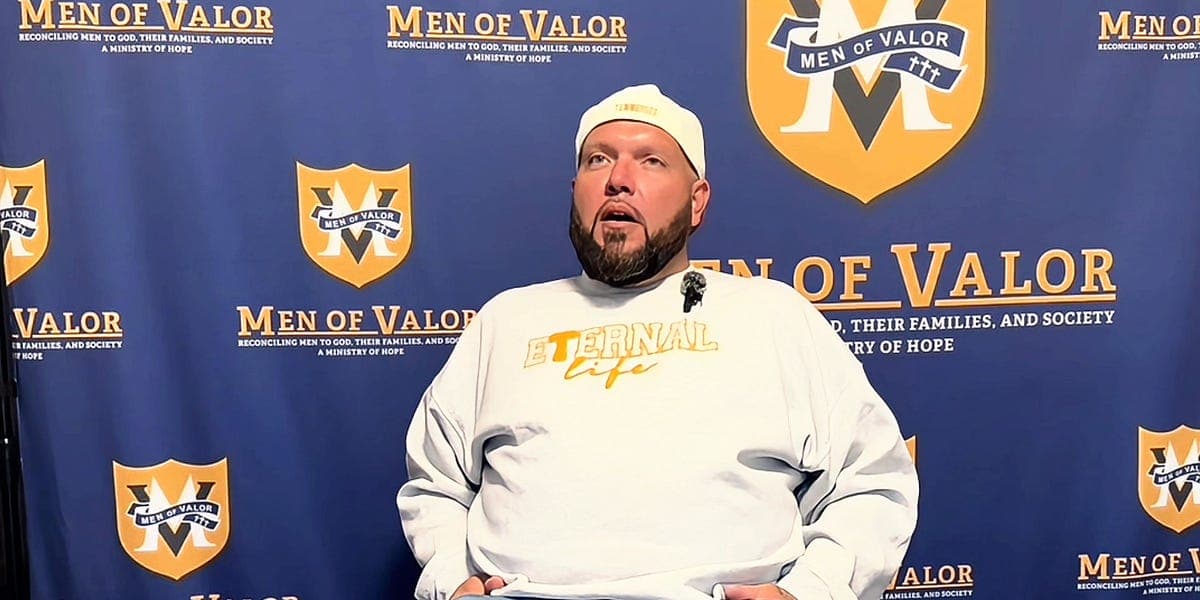
By Brandon Burley of The Redemption Project Redemption Story of the Week: Steve Smith Steve walked out of prison in August 2025 with nothing but the clothes on his back and a box of books. No family waiting.No friends.No safety net. Before prison, Steve knew the life he was living wasn’t right. A divorce sent him spiraling. Drugs followed. Then selling meth and heroin. Then prison. Behind bars, something changed. Steve found God. And instead of wasting the time, he used it—working to become someone different than the man who went in. When he was released, he came straight to Men of Valor Knoxville. Now, Steve is starting over from zero—but with purpose. He’s grateful for the structure, the accountability, and the opportunity to rebuild a life he never thought he’d have. Redemption doesn’t always come with applause.Sometimes it comes quietly—when a man decides he’s done living the old way. I am a retired detective and criminal justice / government educator based in Tennessee. I am a commentary write for Tennessee Lookout and a weekly columnist with Knox TN Today . My work examines public policy, public safety systems and civic responsibility. My reporting and commentary have also appeared in Governing , The Arizona Capitol Times , South Florida Sun Sentinel , Police1 , among other state and regional outlets. Get full access to The Redemption Project Newsroom at newsroom.theredemptionproject.news/subscribe

S1 E12
14
Open episodeWatch
Also available on
Redemption Story: Dewey Burton

Redemption Stories

Redemption Story: Dewey Burton

Dewey Burton’s past isn’t easy to talk about — and it shouldn’t be. Before coming to Men of Valor, Dewey had already been convicted of robbery. After serving his time and being out of prison for just over a year, he was charged with aggravated child neglect. When that case crossed my desk years ago, I knew from the way Dewey responded that it wasn’t going to sit right with me. Some cases don’t. This was one of them. That matters. Redemption does not erase accountability. While incarcerated, Dewey applied to multiple halfway houses. Every door closed — except one. Men of Valor was the only program willing to take him. Not because they minimized what he’d done, but because they believed that change still had to be possible if accountability meant anything at all. While still in jail, Dewey completed the Men of Valor F.O.C.U.S. class — a 12-week program centered on discipline, responsibility, and confronting the truth about oneself. He didn’t pretend he could fix his life on his own. In fact, he was clear about the opposite. “I know I can’t do this by myself,” Dewey said. Since entering the Men of Valor program, Dewey has been working and rebuilding structure in his life. One of the biggest lessons he’s had to learn is slowing down — not rushing decisions, not reacting emotionally, not defaulting to old patterns when pressure hits. What surprised him most wasn’t the rules or the workload. It was the love. Dewey admits that growing up, he wasn’t used to the kind of consistent, accountable care he’s experienced at Men of Valor. Love with boundaries was unfamiliar territory. It forced him to confront how much of his past behavior was shaped by what he never learned growing up — especially his relationship with his father. That realization hasn’t excused his choices. But it has made him take ownership of changing them. Today, Dewey says he is following Jesus — not as a slogan, but as a daily discipline. He knows trust is rebuilt slowly. He knows redemption isn’t owed. And he understands that some people will never be comfortable with his story. He’s learning to live with that too. Redemption isn’t pretending the past didn’t happen. It’s choosing to live differently anyway — every single day. Get full access to The Redemption Project Newsroom at newsroom.theredemptionproject.news/subscribe

S1 E11
274
Open episodeWatch
Also available on

March 2026

Redemption Story: Dustin Morgan

Redemption Stories

Redemption Story: Dustin Morgan

Dustin Morgan’s story carries a weight that never fully goes away — and he doesn’t pretend that it should. Dustin was convicted of second-degree murder. He shot and killed a man. He pled guilty and received a 15-year sentence. There’s no minimizing that, and Dustin doesn’t try to. He owns it. Before prison, Dustin worked as a paramedic — a job built around saving lives. Losing that identity, and then facing the reality of taking a life, forced him into a level of humility he had never known before. Prison stripped everything familiar away. Titles, confidence, control — gone. What remained was the hard work of reckoning with his actions and deciding whether his life would end there or be rebuilt from the ground up. Through Men of Valor Knoxville, Dustin began that rebuilding process. The work wasn’t dramatic. It was humbling. He learned discipline, accountability, and how to show up consistently — even when the work felt small or unseen. Today, Dustin speaks openly about how humbling his current work has been compared to who he once was. Not with bitterness — but with gratitude. He understands now that growth often comes through being brought low. Dustin is nearing graduation from Men of Valor. He’s focused on the next chapter of his life — not pretending the past didn’t happen, but refusing to let it define the rest of his story. Redemption doesn’t erase consequences. But it does make transformation possible. Get full access to The Redemption Project Newsroom at newsroom.theredemptionproject.news/subscribe

S1 E10
462
Open episodeWatch
Also available on

February 2026

Redemption Story: Sean Luttrell

Redemption Stories

Redemption Story: Sean Luttrell

Sean Luttrell’s first arrest came in 2023. By his own words, he wasn’t confused about how he got there. He was living an evil life — one bad decision stacked on top of another until the weight finally caught up with him. The arrest didn’t surprise him. In a way, it confirmed what he already knew: the path he was on only led one direction. While incarcerated for aggravated assault, something shifted. Sean didn’t start with grand promises or dramatic declarations. He hit his knees. He opened his Bible. And he began reading it every day — not for comfort, not to pass time, but because he knew he needed real change. Slowly, he says, he could feel something happening inside him. Not all at once. Not overnight. But enough to know this wasn’t just another jailhouse phase. After serving one year, Sean expected to be released. Instead, he stayed another year. At the time, it felt like a setback. Looking back, Sean believes it wasn’t punishment — it was preparation. “God had other plans,” he says. Plans that required more time, more discipline, and fewer distractions. During that additional year, Sean completed the Men of Valor program while still inside the jail. He chose growth over bitterness. Structure over excuses. Accountability over shortcuts. It wasn’t easy — but it was necessary. Redemption, Sean learned, doesn’t always mean getting out sooner. Sometimes it means staying longer… so you don’t come out the same. Today, Sean carries that lesson with him. He doesn’t deny his past or minimize his mistakes. He understands the harm his choices caused. But he also understands that change is possible — when someone finally stops running and starts surrendering. Sean’s story isn’t loud. It isn’t flashy. It’s quiet, deliberate, and honest. And sometimes, those are the ones that last. Get full access to The Redemption Project Newsroom at newsroom.theredemptionproject.news/subscribe

S1 E8
428
Open episodeWatch
Also available on
Redemption Story: Michael King

Redemption Stories

Redemption Story: Michael King

From Maximum Security to Redemption. Michael Charles King was convicted of murder in 1992 and sentenced to life with the possibility of parole. He spent years in maximum security, planned an escape for over a year—and was caught the same day.But that’s not where his story ends.In this full conversation, Michael talks honestly about what prison couldn’t fix, what finally changed him, and how love, accountability, and structure reshaped his life after release.Paroled in 2023. Nearly lost everything again. Didn’t quit. Today, he works with Men of Valor Knoxville and mentors other men rebuilding their lives from the inside out.This isn’t a story about excusing the past.It ’s about what real redemption looks like when it’s lived daily. Get full access to The Redemption Project Newsroom at newsroom.theredemptionproject.news/subscribe

S1 E7
400
Open episodeWatch
Also available on

January 2026

No One Was Coming to Rescue Me — Kevin

Redemption Stories

No One Was Coming to Rescue Me — Kevin

Kevin’s story isn’t built on a single dramatic turning point. It’s built on decisions. In this short-form episode, Kevin talks about how small choices stacked up over time and eventually led him to prison. Inside, the noise faded—and what remained was the truth he couldn’t avoid anymore: the life he had been living wasn’t working, and no one was coming to rescue him from it. Kevin shares what it was like to encounter Men of Valor, a program that demanded accountability, discipline, and humility. There were no shortcuts—only the daily choice to take responsibility and keep going. This episode of The Redemption Project is about quiet change, honest work, and rebuilding life one decision at a time. Get full access to The Redemption Project Newsroom at newsroom.theredemptionproject.news/subscribe

S1 E6
366
Open episodeWatch
Also available on
I Stayed Because I Needed the Structure — Kris

Redemption Stories

I Stayed Because I Needed the Structure — Kris

Kris shares his story of coming to Men of Valor Knoxville after being released from Bledsoe Prison and choosing to stay—not because he had to, but because he knew he needed structure, accountability, and community. In this short-form conversation, Kris talks about navigating self-doubt, facing unexpected responsibilities like child support, and how relationships—not just sobriety—became the foundation for lasting change. Today, he serves as the ReEntry Minister and Family Coordinator at Men of Valor Knoxville, helping others walk the same path he once did. This episode is part of The Redemption Project —real stories about responsibility, faith, and rebuilding life after incarceration. Get full access to The Redemption Project Newsroom at newsroom.theredemptionproject.news/subscribe

S1 E5
723
Open episodeWatch
Also available on

December 2025

I Stopped Trying to Handle This on My Own — Dwan

Redemption Stories

I Stopped Trying to Handle This on My Own — Dwan

A short conversation with Duan, who chose to continue his journey with Men of Valor Knoxville after his release from the Knox County Jail. After completing the Men of Valor program while incarcerated, Duan could have walked away. Instead, even while on enhanced probation, he chose to stay focused on the work in front of him. For Duan, this season isn’t about fear — it’s about focus. He talks about getting clean and sober, learning new ways to cope, and why turning to God changed how he handles life’s problems. This conversation is part of The Redemption Project , a podcast about real people, real consequences, and the ongoing work of change. 🎧 Full conversations available weekly on Spotify and major podcast platforms. Get full access to The Redemption Project Newsroom at newsroom.theredemptionproject.news/subscribe

S1 E4
529
Open episodeWatch
Also available on
S1: E2 John from Men of Valor

Redemption Stories

S1: E2 John from Men of Valor

This week’s Redemption Story comes from Knoxville, Tennessee. John Duck graduates from the Men of Valor residential program on December 26, 2025—the day after Christmas, and his daughter’s birthday. Hard to imagine a better gift.John was addicted from age 13 to 43. A former gang member. In and out of prison. A man the world would’ve written off a long time ago.But in a prison cell, he met God.And everything started to change.He’s now been sober for three years.He’s rebuilding his life.And after he graduates, John wants to stay with Men of Valor and pour into the next group of men—because, as he told me:“They shaped me into somebody who was tired of killing the community… and wanted to help the community.”That’s redemption.That’s Knoxville.That’s what happens when faith, accountability, and second chances collide. Get full access to The Redemption Project Newsroom at newsroom.theredemptionproject.news/subscribe

S1 E2
806
Open episodeWatch
Also available on
S1:E1 Redemption, Recovery, and Reentry | Full 60-Minute Radio Interview

Redemption Stories

S1:E1 Redemption, Recovery, and Reentry | Full 60-Minute Radio Interview

This is the full, unedited 60-minute radio interview from The Weekly Law Round-up, where The Redemption Project is introduced; discussing redemption, recovery, reentry, and public safety.The conversation explores what life actually looks like after incarceration, the role of accountability and structure in long-term recovery, and why some reentry approaches succeed while others fail.Topics include:• Life after prison and reentry challenges• Addiction, recovery, and personal responsibility• Faith-based and community reentry programs• Reducing recidivism while improving public safety• What real rehabilitation looks like beyond policy slogansThe Redemption Project focuses on real stories of transformation, responsibility, and second chances.For written stories and additional resources, visit: www.BurleyBooks.com Get full access to The Redemption Project Newsroom at newsroom.theredemptionproject.news/subscribe

S1 E1
3613
Open episodeWatch
Also available on